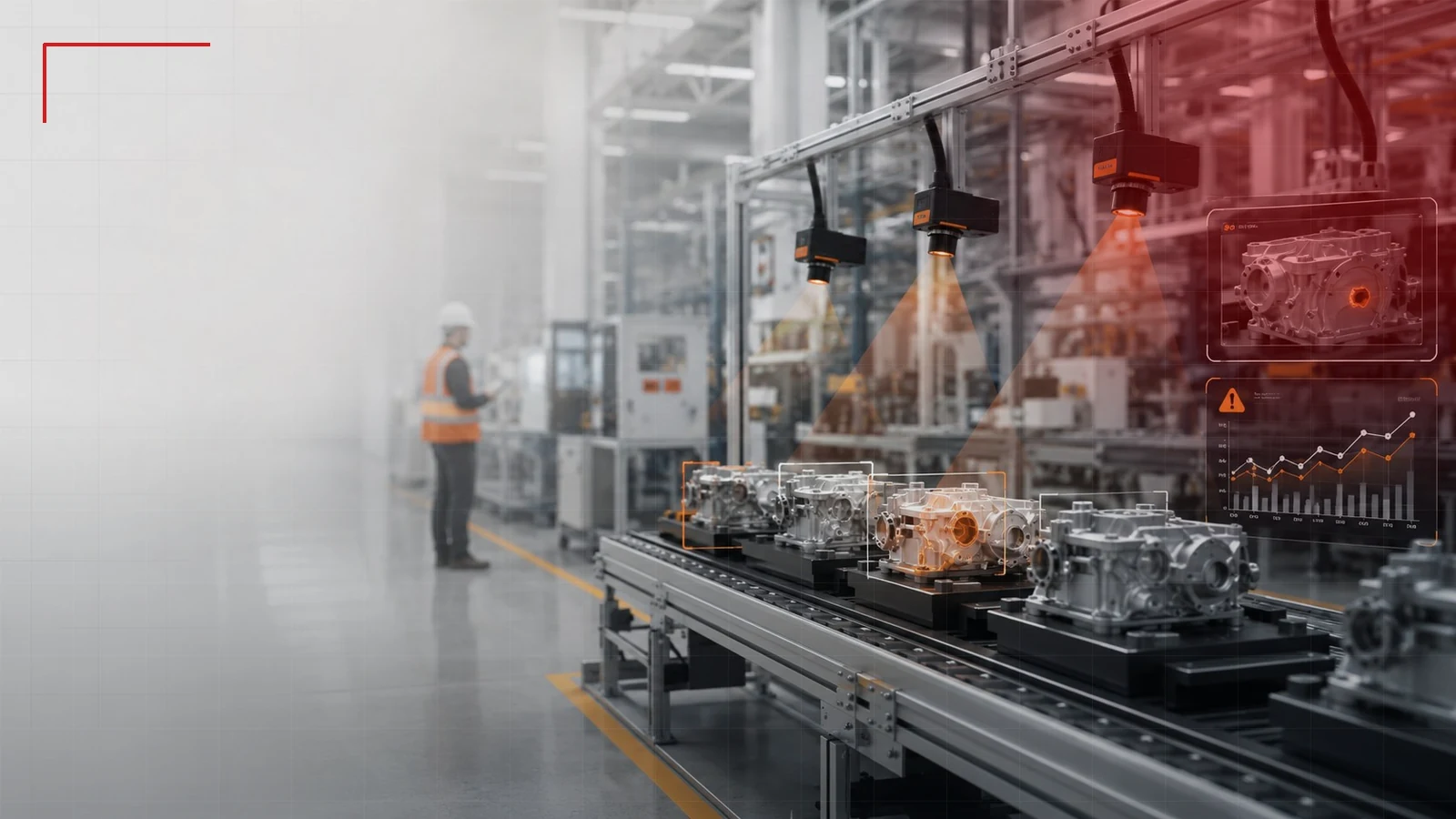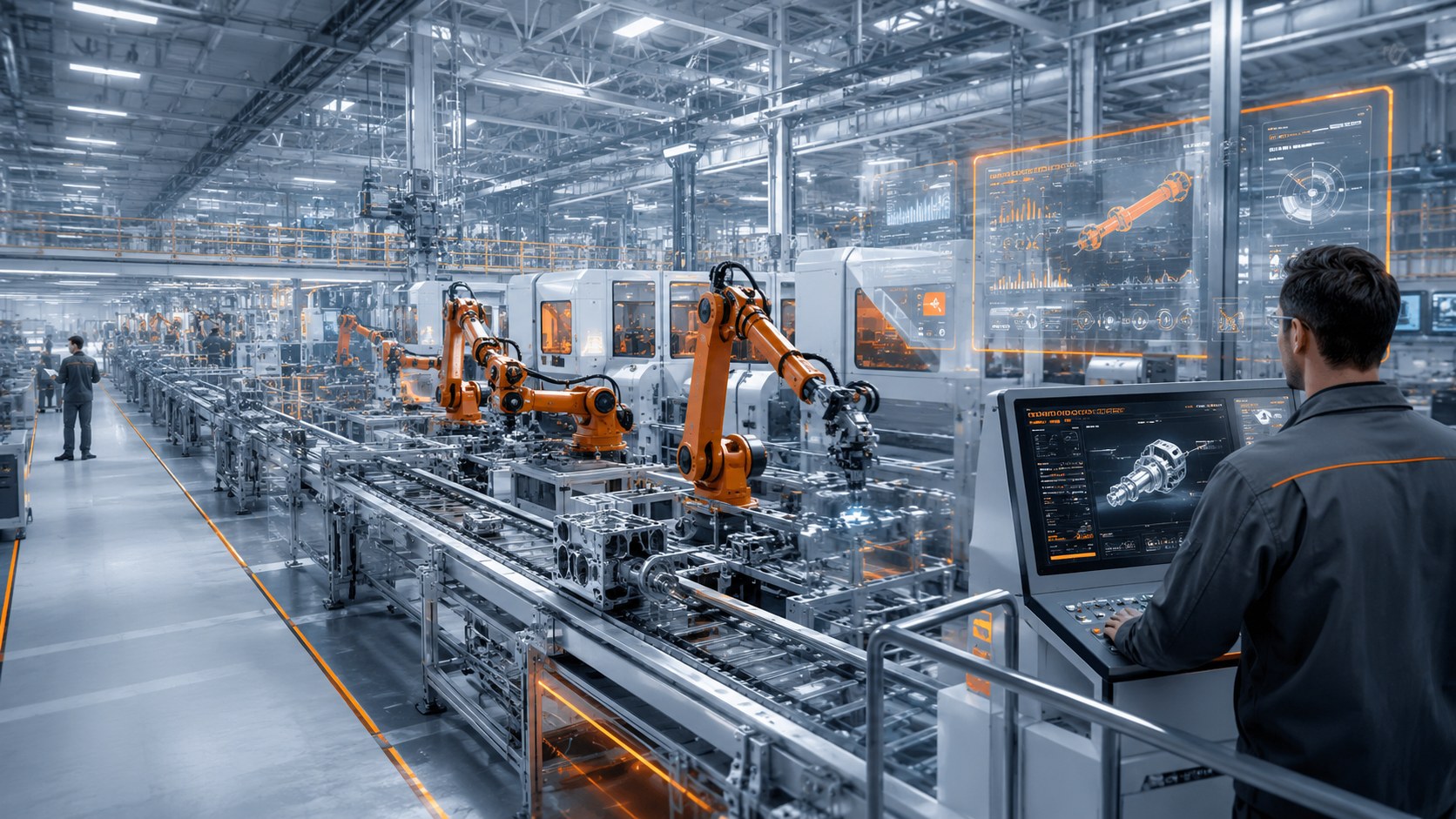
A strong model in a laboratory does not automatically become a dependable inspection system on a line. Production performance depends on the complete image acquisition and operating workflow, including what happens when confidence is low or the line condition changes.
Start with the inspection physics
Surface finish, speed, vibration, viewing angle and ambient light all shape the image before inference begins. A model cannot recover detail that the optical system never captured.
Production design therefore starts with the defect, measurement or compliance condition, then selects the camera, lens, illumination and trigger strategy around the actual station.
- Field of view and working distance
- Lighting geometry and surface response
- Trigger timing and motion blur
- Environmental protection and maintainability
Design for the line cycle
Inference must complete within the available cycle and produce an output the PLC, MES or operator workflow can use. This often makes local edge execution the right choice for inspection, safety and process verification.
The system should also define how low-confidence outcomes are handled, how images are retained and how a false reject or escape becomes structured feedback.
Operate the model as a production asset
Models need version control, release approval, monitoring and rollback. Performance should be evaluated by production condition, product family and defect type rather than a single aggregate score.
VisionX combines the inspection model with edge deployment, verification workflows and integration so the capability remains useful after the pilot team leaves the site.
Standards and primary sources used for context.
These links provide technical context. Their inclusion does not claim product certification or compliance unless explicitly stated elsewhere.