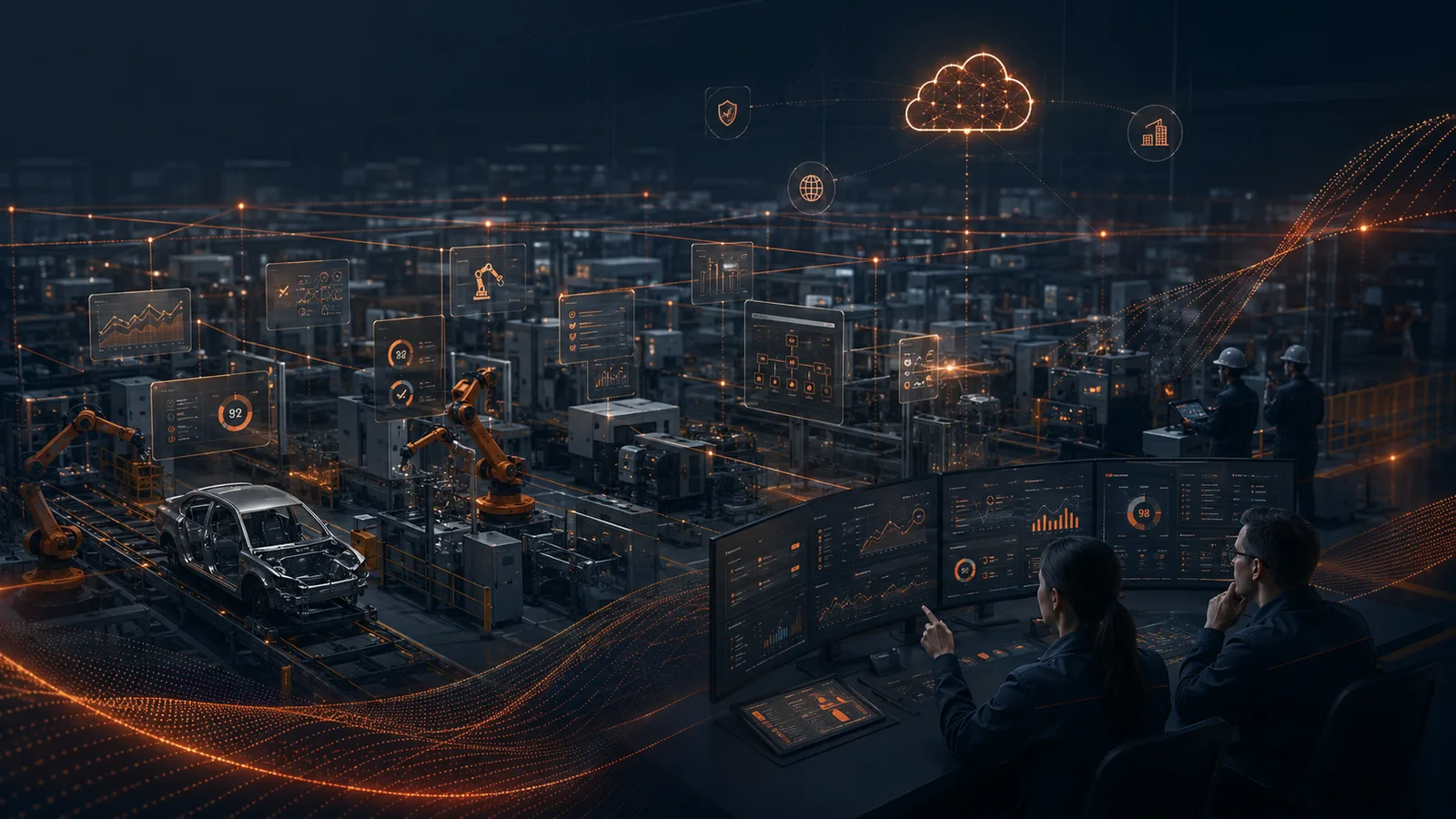
The OT-to-AI reference architecture
A practical architecture for moving from plant signals to governed intelligence without bypassing industrial security, context or human control.
Read the guide →Practical perspectives, product demonstrations, engineering guides and updates across industrial AI, OT systems, digital twins, computer vision and enterprise IoT.
A practical architecture for moving from plant signals to governed intelligence without bypassing industrial security, context or human control.
Read the guide →Every resource is classified by evidence level, reviewed by Delfers Product and Engineering, and linked to primary technical references where relevant.
Eight detailed patterns across sensing, digital twins, computer vision and agentic AI. Capabilities are separated from outcomes that require site evidence.
Solution brief
A human-approved troubleshooting pattern that brings alarms, trends, asset context and procedures into one evidence-linked investigation.
Solution brief
A practical pattern for connecting vibration, temperature, motor-current and ultrasound signals to an owned maintenance workflow.
Solution brief
A cited operational-briefing pattern that connects alarms, events, asset state and human notes without inventing missing context.
Solution brief
A governed vision pattern for detecting defined safety conditions while preserving review, evidence and operating context.
Solution brief
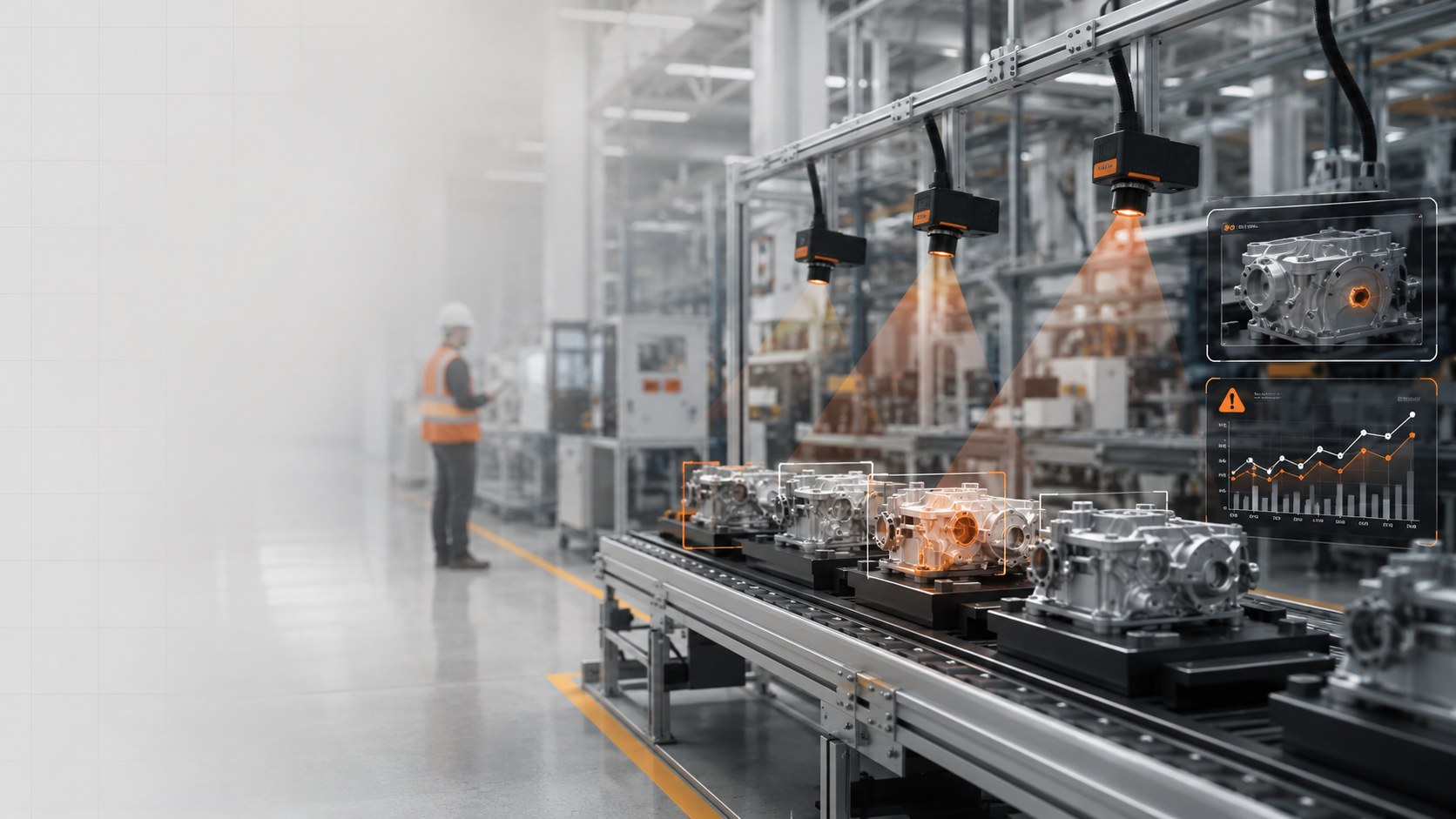
A production-grade vision pattern combining camera engineering, edge inference, verification, evidence and line integration.
Solution brief
A governed pattern for evaluating production changes before applying them to the live process.
Solution brief
Connect production, utility and asset context so energy intensity can be interpreted alongside what the plant was actually doing.
Solution brief
A site pattern for monitoring temperature, humidity, door state, power and equipment health across distributed storage environments.
Each collection brings together architecture, operating guidance and demonstrations around a practical industrial problem.
Industrial sensing, alarm ownership, asset models and on-site resilience.
Explore SensX resources → 02Operational context, digital twins, scenario basis and governed steering.
Explore Cortex resources → 03Camera engineering, edge inference, verification and production integration.
Explore VisionX resources → 04Cited findings, operational reasoning, human approval and agent workflows.
Explore Sentrix resources →Each resource is designed to help teams make a clearer architecture, deployment or operating decision.
Solution brief
A human-approved troubleshooting pattern that brings alarms, trends, asset context and procedures into one evidence-linked investigation.
Solution brief
A practical pattern for connecting vibration, temperature, motor-current and ultrasound signals to an owned maintenance workflow.
Solution brief
A cited operational-briefing pattern that connects alarms, events, asset state and human notes without inventing missing context.
Solution brief
A governed vision pattern for detecting defined safety conditions while preserving review, evidence and operating context.
Solution brief
A production-grade vision pattern combining camera engineering, edge inference, verification, evidence and line integration.
Solution brief
A governed pattern for evaluating production changes before applying them to the live process.
Solution brief
Connect production, utility and asset context so energy intensity can be interpreted alongside what the plant was actually doing.
Solution brief
A site pattern for monitoring temperature, humidity, door state, power and equipment health across distributed storage environments.
Operations perspective
An alarm should become accountable work with an owner, a clock, evidence and a clear path to closure, not another red dot on a crowded screen.
Perspective
AI becomes useful on the plant floor only when recommendations are grounded in assets, process history, operating limits and human decisions.
Engineering note
Reliable industrial vision depends on optics, lighting, edge compute, verification, model lifecycle and production integration working as one engineered system.
Architecture guide
A practical architecture for moving from plant signals to governed intelligence without bypassing industrial security, context or human control.
Practical checklist
A structured way to assess signals, context, quality, ownership, history and deployment constraints before beginning an industrial AI use case.
Product demonstration
A guided view of how Cortex connects live plant context, digital twin models and governed what-if analysis for operational teams.
Engineering note
A trustworthy digital twin should communicate the basis, range and confidence of every simulation, and refuse when no defensible basis exists.
Delfers update
A concise periodic briefing with practical industrial AI perspectives, new guides, demonstrations and product updates from the Delfers engineering teams.
Architecture
The right deployment pattern depends on latency, connectivity, data sovereignty, model lifecycle and the operational consequence of delay.
Video
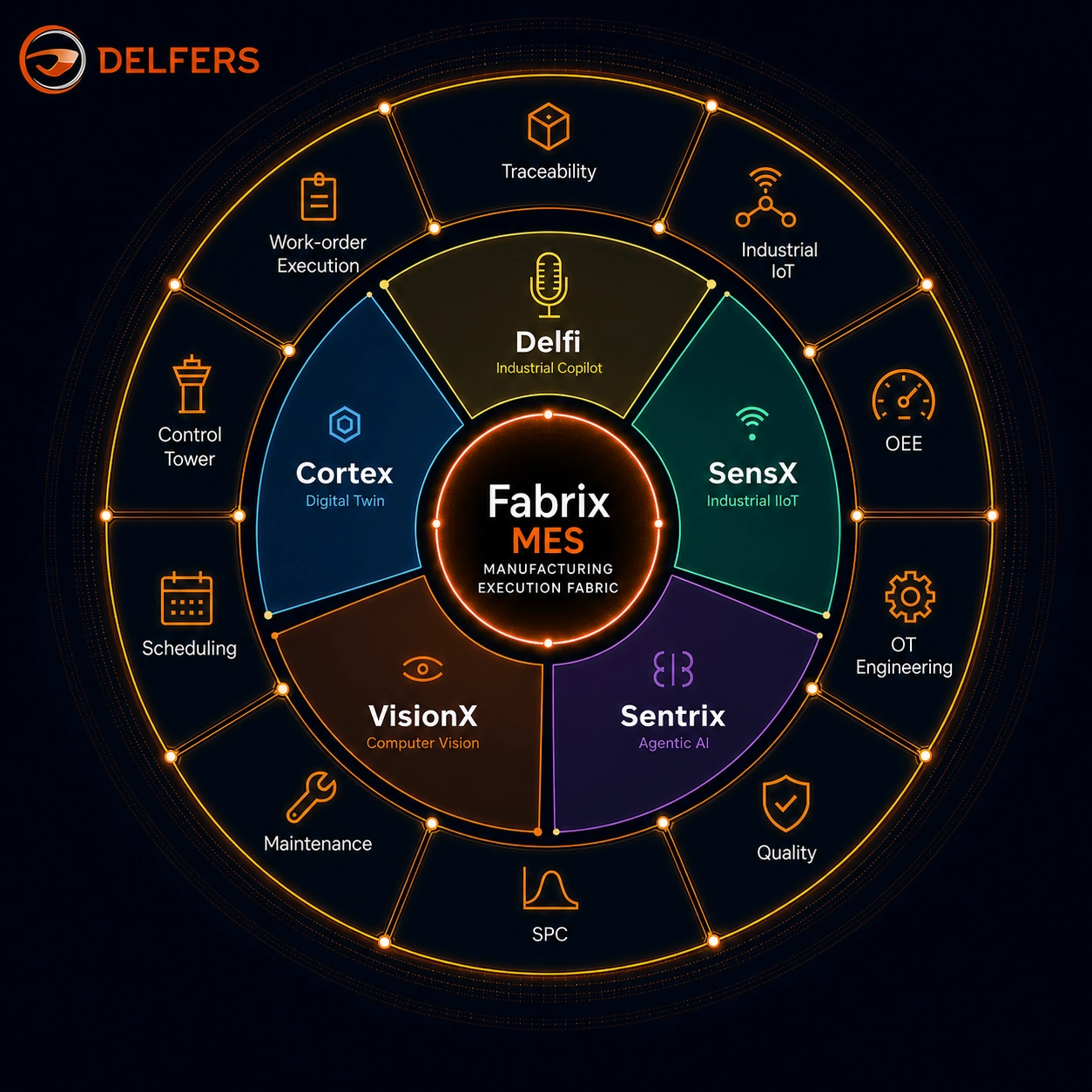
A concise view of how SensX, Cortex, VisionX and Sentrix connect sensing, modelling, visual evidence and human-approved decisions.
Product demonstration
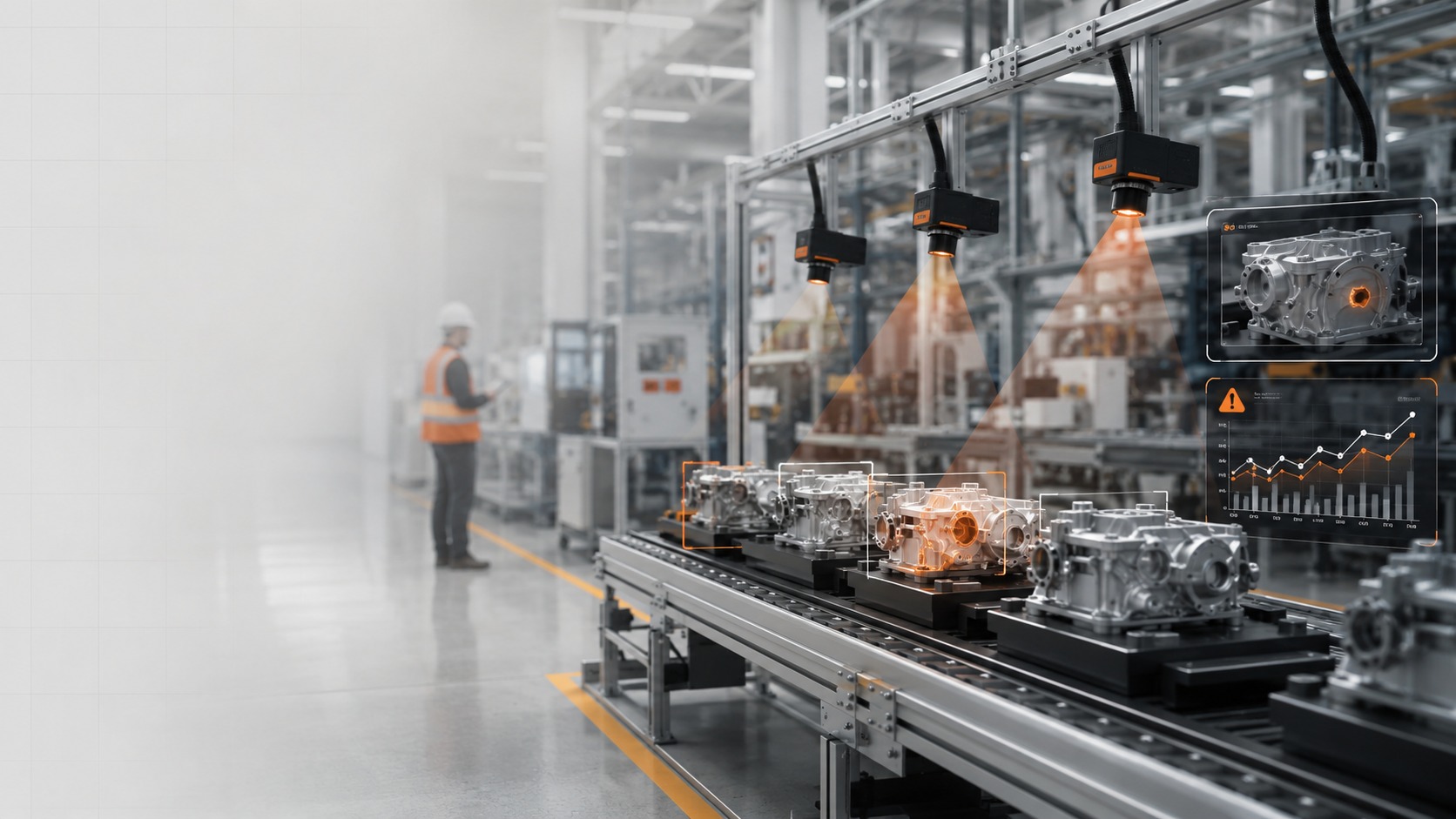
See how cameras, lighting, edge inference, verification workflows and operational integration come together on the production line.
Field guide
A practical guide to connecting OT systems, industrial data, AI and human decisions without losing the realities of the plant floor.
Product guide
A clear introduction to SensX, Cortex, VisionX and Sentrix, including where each product starts and how they work together.
Product update
Delfers adds an enterprise IoT and industrial sensing platform focused on asset intelligence, alarm ownership and honest operating states.
Try a broader topic, clear the search or talk to an engineer about the question you are exploring.
Start with the operating problem in front of you, then scale on a shared foundation for sensing, modelling, visual evidence and human-approved decisions.
Receive a concise briefing with one engineering perspective, one practical guide or demonstration and one relevant product update.

Talk directly with a Delfers engineer about the right first use case, architecture and deployment model for your site.