The hardest part of a multi-plant MES program is rarely installing software. It is deciding what should be identical across every site, what may vary locally, and how to keep those choices governed as the rollout expands.
Define the global core
The global model should establish common concepts for work orders, equipment hierarchy, material identity, routing operations, quality state, downtime reasons and audit requirements.
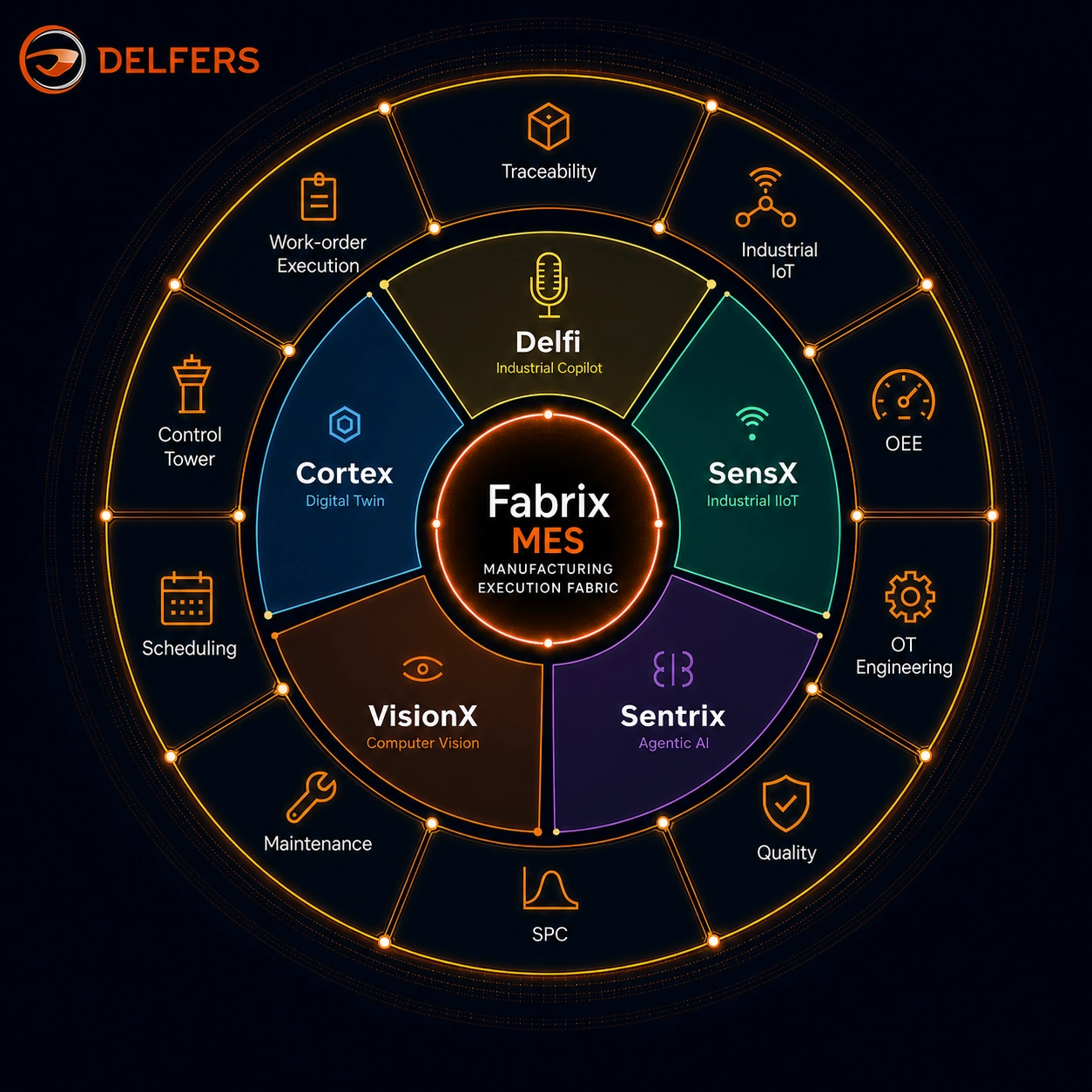
Fabrix is multi-plant by design, so the same platform can apply shared modules and governance while separating site configuration and access where needed.
Localize what is genuinely local
Plants differ in PLC families, line layouts, languages, calendars, regulatory procedures and operator practices. Trying to force every difference into one global template can create workarounds.
The design should distinguish allowed configuration from controlled extension so local choices remain visible and governed.
Build a rollout factory
After the first site, the program should produce reusable onboarding assets: interface templates, master-data mappings, edge deployment patterns, validation scripts, training packs and acceptance criteria.
That turns each additional plant into a repeatable deployment sequence rather than a new discovery project.
- Global process and data template
- Site readiness checklist
- Reusable ERP and OT integration patterns
- Configuration migration and versioning
- Role-based training
- Operational acceptance and support model
Measure readiness before velocity
Rollout speed depends on source-system quality, master-data readiness, network architecture and local ownership. A central program can move quickly only when those dependencies are visible.
A good template includes readiness gates and explicit exceptions, not only a target deployment calendar.
Standards and primary sources used for context.
These links provide technical context. Their inclusion does not claim product certification or compliance unless explicitly stated elsewhere.