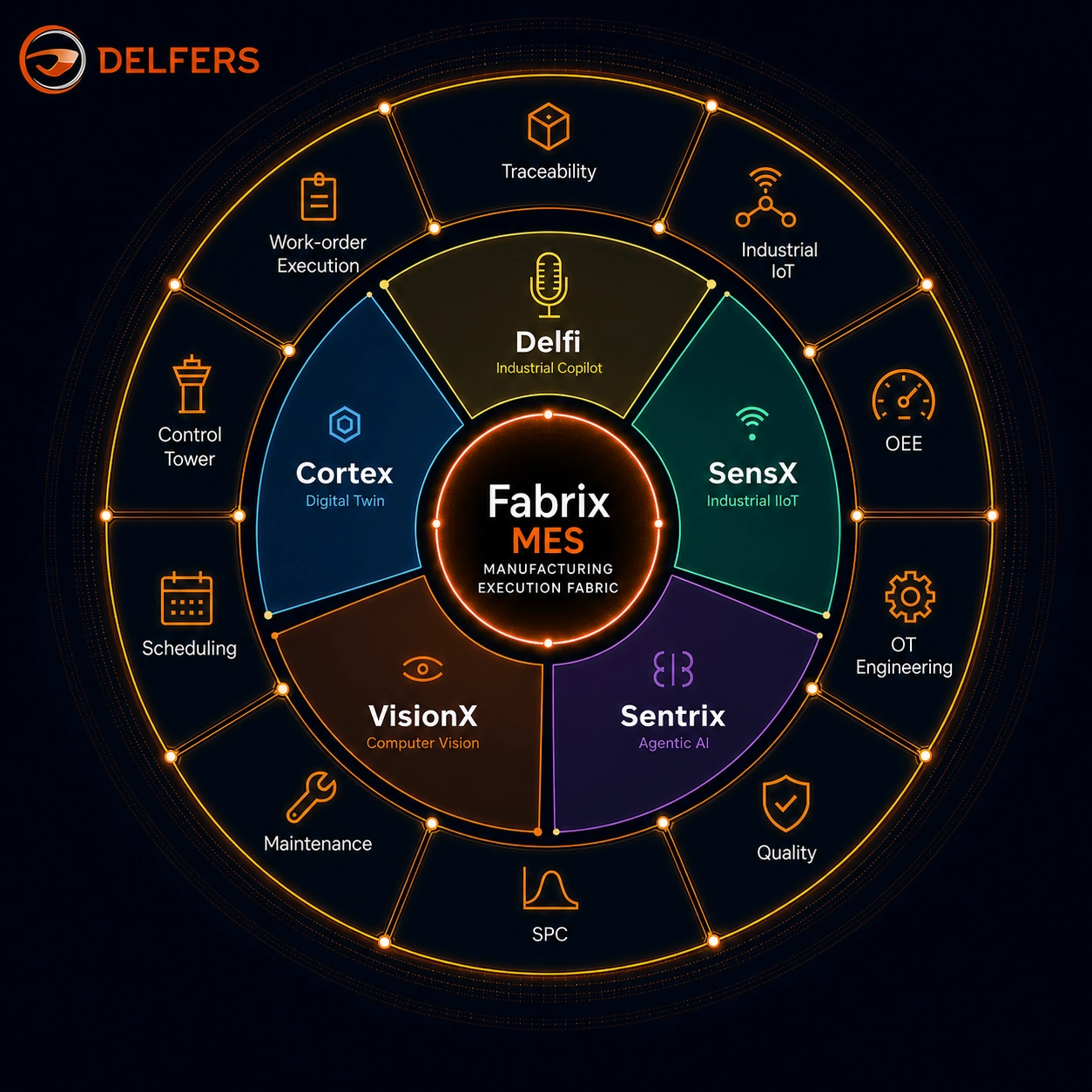
Traceability becomes valuable when the plant can move both directions through the production record: from a finished serial number back to the materials, equipment and operations that shaped it, and from a suspect lot forward to every unit that consumed it.
Genealogy is a graph of relationships
A finished unit is rarely the result of one material and one operation. Components are split, merged, reworked, substituted and consumed at different stages. A robust MES records those relationships as events such as issue, consume, produce, transform, rework, scrap and transfer.
The resulting graph can answer which serial numbers used a supplier lot, which equipment was active, which inspection belongs to the operation and whether a rework path changed the normal routing.
Capture at the point of execution
The strongest traceability record is created where the action occurs. Barcode scans, RFID reads, PLC events, operator confirmations and machine counters should be reconciled into one governed execution event with time, asset and work-order context.
Fabrix keeps those events tied to the work order and routing so genealogy is not a separate data project. The production record, quality state and material relationships evolve together.
Containment starts with precise scope
When a non-conformance is discovered, the first operational question is scope. A broad hold is safe but expensive. A narrow hold is efficient but only defensible when genealogy is complete.
Forward traceability identifies downstream units affected by a suspect lot or process event. Backward traceability explains how an affected unit was built.
- Raw-material and supplier lot
- Component serial number
- Equipment and line
- Routing operation and revision
- Inspection evidence
- Rework and disposition history
Design for exceptions
Most genealogy failures happen around exceptions: material substitutions, offline production, rework, partial consumption and manual corrections. The data model should preserve the original event and the correction instead of silently overwriting history.
Every adjustment should carry an actor, reason and timestamp so the final genealogy can explain both what happened and how the record changed.
Standards and primary sources used for context.
These links provide technical context. Their inclusion does not claim product certification or compliance unless explicitly stated elsewhere.