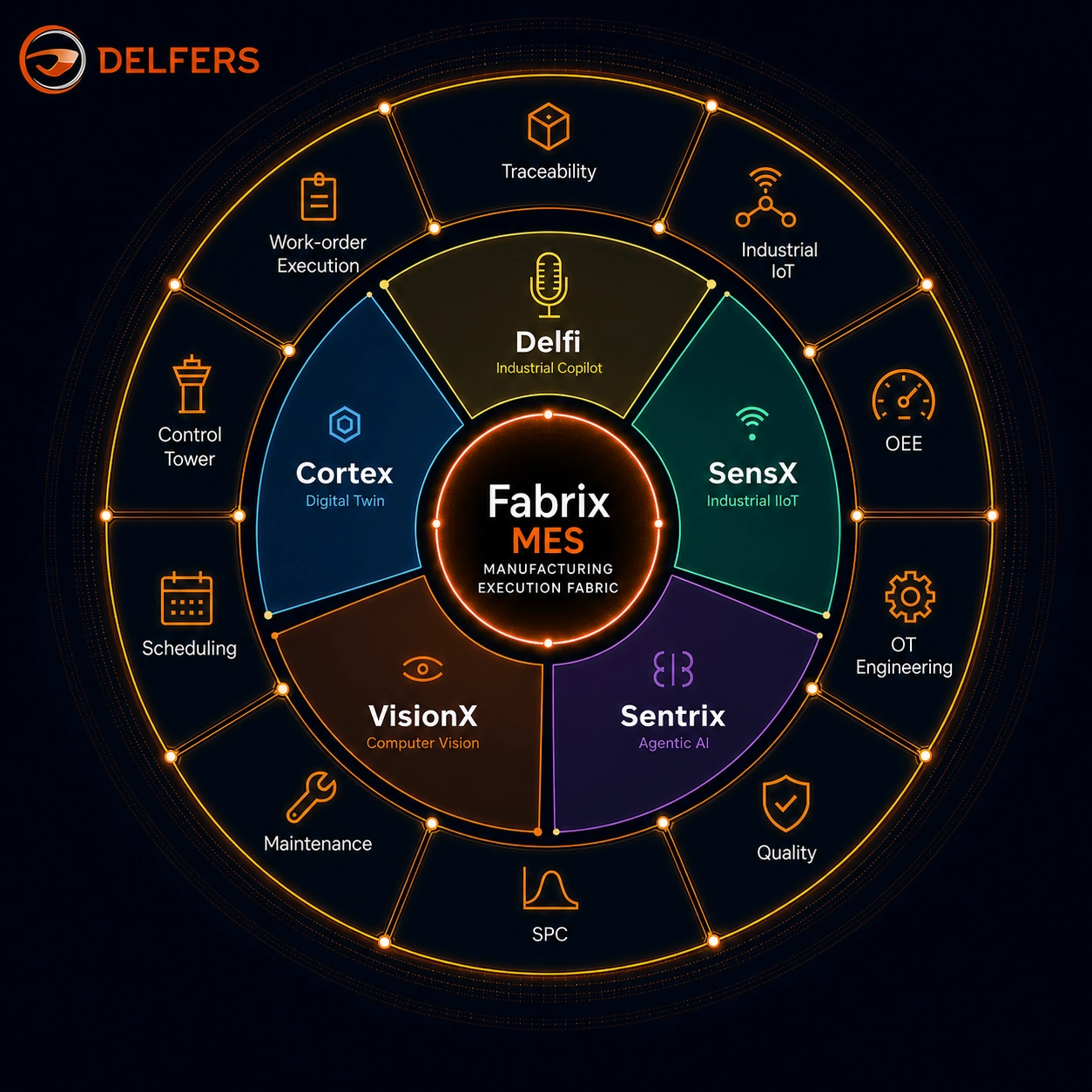
MES contains consequential plant data: what is running, what material was consumed, which unit failed, which work is complete and which order is at risk. That context makes it valuable for AI, but it also means the AI boundary must be designed carefully.
Start with read and explain
The lowest-risk value comes from helping users understand current state. An agent can summarize a shift, explain why an order is delayed, collect the events around downtime or locate the relevant work instruction.
Sentrix is designed to ground those findings in available evidence rather than present unsupported answers as operational fact.
Use MES as context, not a prompt dump
A useful agent should query a governed model of work orders, assets, genealogy, quality state and recent events based on the user question and access rights.
That keeps reasoning traceable and limits the chance that irrelevant or stale context drives the answer.
Separate recommendation from execution
An AI recommendation can prepare an action, but production changes should remain subject to role-based authorization, workflow approval and existing control-system boundaries.
An agent might identify a likely cause, cite supporting alarms and suggest a maintenance check. The operator or engineer still decides whether the recommendation is appropriate.
- Evidence-linked findings
- Role-aware access
- Human approval gates
- Audit log of request, evidence and action
- Clear refusal when evidence is insufficient
Design refusal as a normal outcome
The safest industrial agent is not the one that answers every question. It is the one that can say when available data does not support a conclusion.
A manufacturing execution context makes that easier because missing production identity, stale equipment state or incomplete genealogy can be surfaced explicitly.
Standards and primary sources used for context.
These links provide technical context. Their inclusion does not claim product certification or compliance unless explicitly stated elsewhere.